

Preparing for USMLE Step 2 CK as a US citizen IMG interested in an OB GYN residency is a very specific, very achievable challenge. You’re not only aiming for a strong Step 2 CK score—you’re building the clinical reasoning and specialty credibility that will anchor your obstetrics match application.
This guide is written specifically for:
- US citizen IMG
- American studying abroad (Caribbean, Europe, Asia, etc.)
- Targeting OB GYN residency in the U.S.
You’ll find a structured approach to USMLE Step 2 study, OB GYN–focused strategies, and timing advice aligned with ERAS and the Match.
Understanding Step 2 CK in the Context of OB GYN for US Citizen IMGs
Step 2 CK is now the main standardized academic metric programs use, especially since Step 1 became pass/fail. For a US citizen IMG aiming for OB GYN residency, it carries extra weight for three reasons:
Objective comparison tool
Programs use Step 2 CK to compare you with:- US MD seniors
- US DO seniors
- Non-US IMGs
A strong Step 2 CK score reassures PDs that your clinical knowledge is on par with US graduates.
Specialty competitiveness
OB GYN is moderately competitive and trending upwards. Programs often use score thresholds to filter applicants. While exact cutoffs vary, many mid-tier programs are more comfortable interviewing candidates in roughly the 230–245+ range, and top-tier academic OB GYN programs may prefer 245–255+, especially for IMGs.Re-framing your transcript
As an American studying abroad, you may:- Not have home clinical rotations in the U.S.
- Come from a school with variable reputation among PDs
A high Step 2 CK mitigates concerns and can offset: - Non-ideal Step 1 performance (even if pass on second attempt)
- Limited U.S. letters of recommendation
- Mid-range medical school prestige
Key takeaway: For a US citizen IMG targeting OB GYN, Step 2 CK is not just another exam—it’s one of the central levers you control to elevate your application.
Setting Your Step 2 CK Target and Timeline as an OB GYN–Bound IMG
What Step 2 CK score should you aim for?
These are general ranges, not rigid rules, and individual programs vary:
≥255:
- Highly competitive across most OB GYN programs
- Puts you in strong contention for many academic and university-based residencies
245–254:
- Very solid for OB GYN
- Competitive for many mid- to upper-tier programs, especially with strong OB GYN letters and U.S. clinical experience
235–244:
- Reasonable for many community and some mid-tier academic programs
- You’ll need stronger supporting elements (OB GYN Sub-I, strong LORs, good personal statement, research helpful but not mandatory)
225–234:
- Still possible to match OB GYN, usually with:
- Strong U.S. clinical evaluations
- Compelling narrative (e.g., strong commitment to women’s health, meaningful experiences)
- Smart, targeted program list and realistic expectations
- Still possible to match OB GYN, usually with:
These ranges are guides, not guarantees. Programs look holistically—but as a US citizen IMG, stronger scores widen your options and lower risk.
When should a US citizen IMG take Step 2 CK?
Optimal timing depends on:
- Your school’s structure
- When you do your OB GYN rotation
- Your planned ERAS submission year
For most US citizen IMGs targeting immediate entry into the Match:
Ideal:
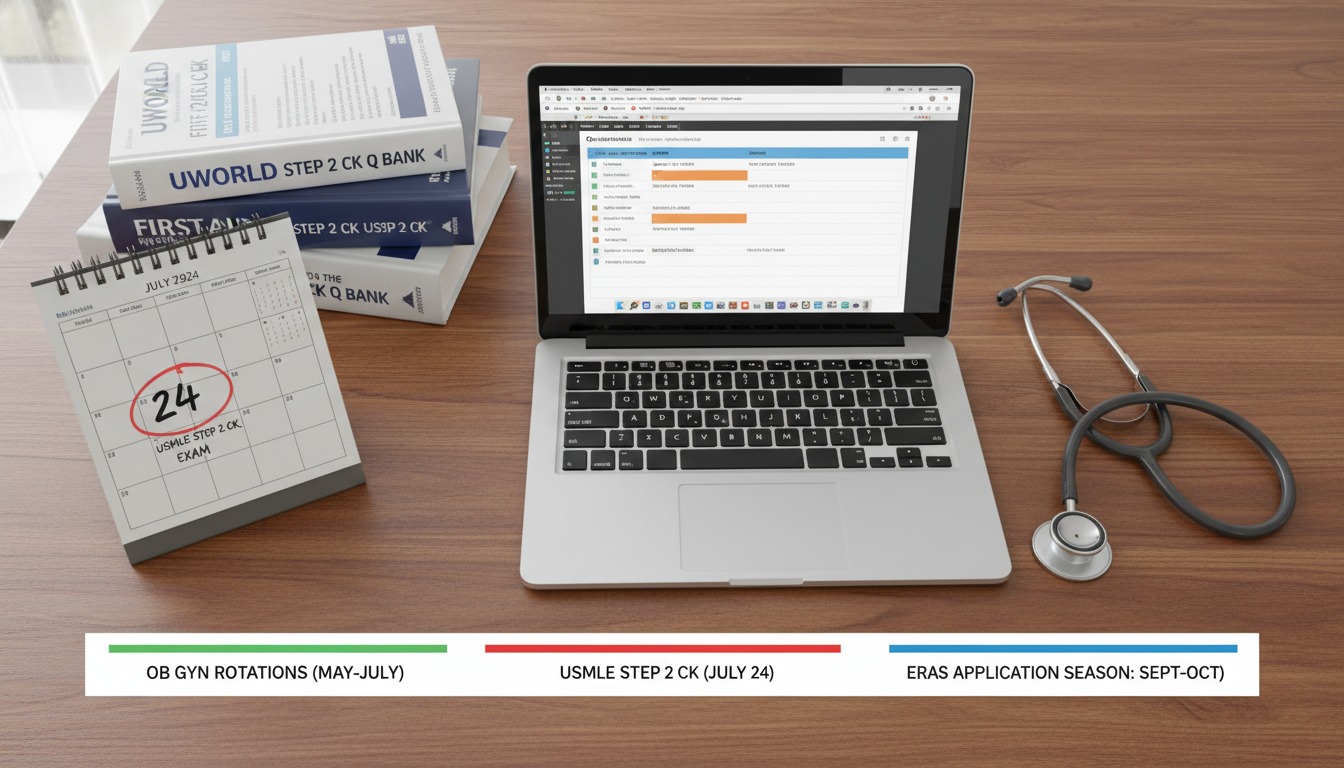
- Take Step 2 CK by late June–July of the year you apply
- Score report returns before ERAS opens (early September)
- Programs see your score when screening
Acceptable but riskier:
- Take Step 2 CK in August–early September
- Score releases mid-late application season
- Some programs might hold decisions until they see your score; others may have filled many interview spots
Suboptimal for IMGs (usually avoid):
- Taking Step 2 CK after September of your application year
- Leaves too much uncertainty, especially if your Step 1 record is not clearly reassuring
For Americans studying abroad, visa is not an issue, but score timing is. Programs may be willing to take a chance on a US citizen IMG with a known strong Step 2 CK, but are less likely to wait on an unknown score.
Actionable advice:
- Work backward from your desired ERAS year and your rotation schedule.
- Aim for at least 8–12 dedicated weeks of focused USMLE Step 2 preparation after your core rotations, especially IM, Pediatrics, Surgery, and OB GYN.
Building an Effective Step 2 CK Study Plan as a US Citizen IMG
Your USMLE Step 2 study plan should reflect both general clinical medicine and OB GYN emphasis. As a US citizen IMG, you often have to be more organized than US MD/DO peers because:
- Your school’s exam prep infrastructure may be weaker.
- You may juggle local exams, language barriers, and different healthcare systems.
- You must deliberately maximize exposure to U.S.-style practice and question patterns.
Step 1: Establish your baseline
Before launching a full study schedule:
Take a diagnostic
- Use NBME Comprehensive Clinical Science Self-Assessment (CCSSA) Form or UWorld Self-Assessment (UWSA1).
- Do this near the start of your dedicated period, after you’ve finished most core rotations.
Interpret your baseline
- If you’re ≥240 on NBME/UWSA:
- You can push for a higher Step 2 CK score with a good plan.
- If you’re 220–239:
- You’re within striking distance; focus on patching weak areas.
- If you’re <220:
- Extend study time if possible.
- Consider delaying your test date to avoid underperforming on a crucial metric.
- If you’re ≥240 on NBME/UWSA:
Step 2: Core resources for USMLE Step 2 preparation
For almost all US citizen IMGs, the following core resource stack works well:
UWorld Step 2 CK QBank (non-negotiable)
- Aim for 1 full pass, preferably 1.3–1.5 passes if time allows.
- Do timed, random blocks to build exam stamina and adaptability.
- Use the detailed explanations to build conceptual understanding, not just memorize answers.
NBME CCSSAs + UWSAs
- Incorporate 2–4 NBMEs and 1–2 UWSAs.
- Space them every 2–3 weeks in dedicated.
- Use them to adjust pacing, content emphasis, and test date.
An organized written resource Options include:
- USMLE Step 2 Secrets (good for quick facts and “testable points”)
- OnlineMedEd notes or AMBOSS articles
Choose one primary reference and stick to it; don’t try to read every textbook.
Clinical guideline awareness (especially for OB GYN)
- For OB GYN specifically, be aware of:
- Common ACOG practice bulletins or summarized guideline topics (preeclampsia, gestational diabetes, prenatal care schedules, cervical cancer screening, contraception choices).
- You don’t need deep literature review; high-yield summaries and question bank patterns suffice.
- For OB GYN specifically, be aware of:
Step 3: Example 10–12 week dedicated Step 2 CK study schedule
Weeks 1–4: Foundation and coverage
- Daily goals:
- 40–60 UWorld questions (timed, random, mixed topics).
- Rapid review of explanations, annotating into your primary notes resource.
- Begin targeted review of weak systems based on early performance (e.g., OB GYN, Medicine, Pediatrics).
- Weekly goals:
- 1 NBME or practice exam every 2 weeks.
- At least 1 focused review session on OB GYN and Women’s Health.
Weeks 5–8: Consolidation and OB GYN emphasis
- Daily goals:
- 60–80 UWorld questions (if stamina allows), still timed and random.
- Begin second pass of your weakest subjects in UWorld (often OB GYN, Psychiatry, Pediatrics for many IMGs).
- OB GYN–focused tasks (1–2 days/week):
- High-yield topics:
- Prenatal care and screening
- Management of hypertensive disorders of pregnancy
- Preterm labor, PPROM
- Postpartum hemorrhage and infections
- Gynecologic oncology basics (endometrial, cervical, ovarian cancer patterns)
- Contraception and infertility basics
- Use case-based questions and mini-lectures (e.g., OnlineMedEd, AMBOSS) to reinforce.
- High-yield topics:
Weeks 9–10 (or 9–12 if longer dedicated): Final refinement
- Daily goals:
- 40–60 UWorld questions, focusing on:
- Marked questions
- Low-performing systems
- OB GYN and IM
- High-yield fact review: drug side effects, diagnostic criteria, algorithms.
- 40–60 UWorld questions, focusing on:
- Assessment:
- Take 1–2 final self-assessments (e.g., UWSA2 + an NBME).
- If scores align with your target range and are stable, you’re ready.
- If scores fluctuate downward, consider whether a short delay is feasible.
Practical tip (especially for US citizen IMGs):
Make your study schedule visible and specific:
- Use a calendar or spreadsheet with:
- Daily UWorld question targets
- Planned NBME dates
- Designated OB GYN review sessions
Missing a day is not catastrophic, but slipping for a week can be.
OB GYN–Specific Strategy: Aligning Step 2 CK Prep with Your Residency Goal
Since you are specifically targeting an OB GYN residency, you should treat OB GYN content as both exam prep and early specialty training.
High-yield OB GYN content domains on Step 2 CK
Prenatal care and screening
- Initial prenatal visit: labs, infectious disease screening, blood type/Rh, rubella, varicella, HIV, syphilis, hepatitis B.
- Aneuploidy screening options and timing (first-trimester combined, cell-free DNA, quad screen).
- Routine third-trimester considerations (GBS, gestational diabetes, Rho(D) immune globulin).
Hypertensive disorders of pregnancy
- Differentiating:
- Gestational hypertension
- Preeclampsia (with/without severe features)
- Eclampsia
- Chronic hypertension vs superimposed preeclampsia
- Management thresholds (delivery timing, magnesium sulfate use, antihypertensives).
- Differentiating:
Obstetric emergencies
- Postpartum hemorrhage: causes (4 Ts), stepwise management.
- Shoulder dystocia: maneuvers.
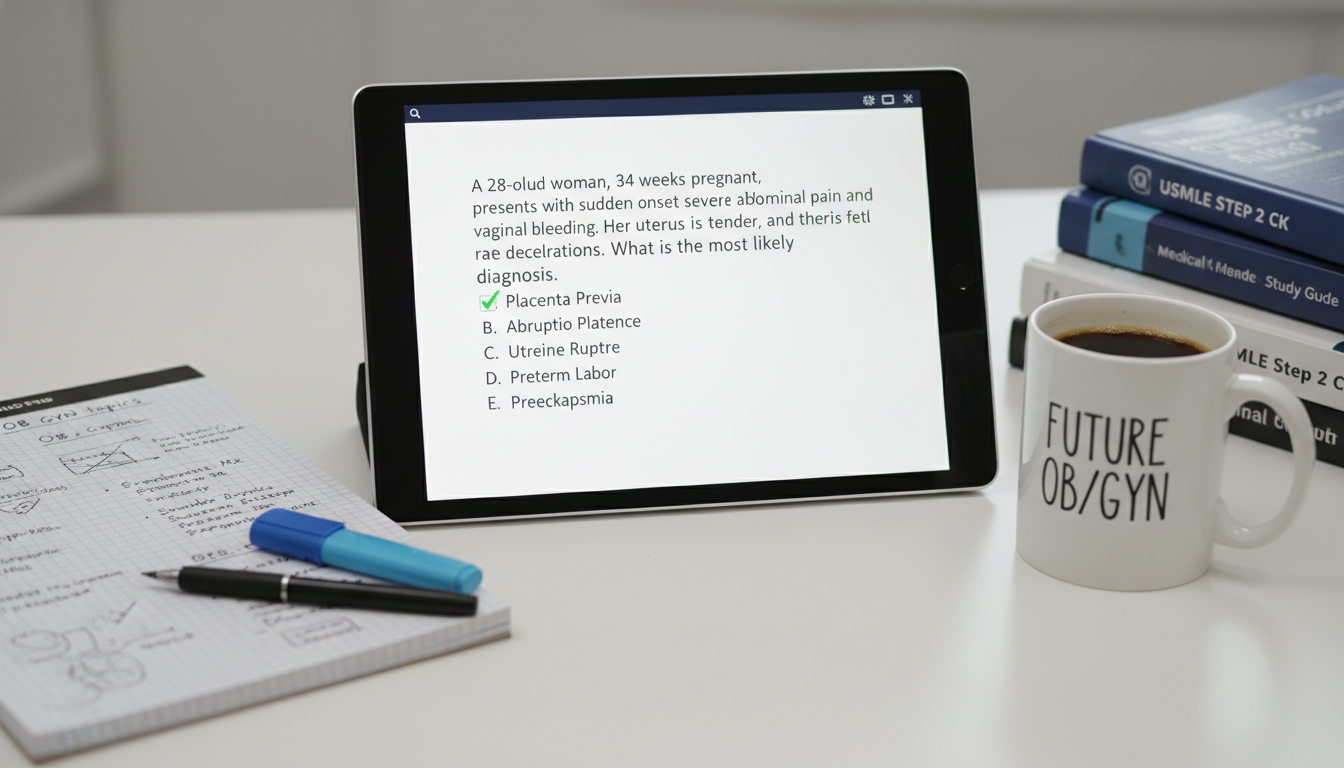
- Uterine rupture vs placental abruption vs placenta previa.
- Amniotic fluid embolism basics.
Labor and delivery
- Stages of labor; normal vs abnormal progression.
- Fetal heart rate patterns and management (late decelerations, variable decelerations, minimal variability).
- Indications for operative vaginal delivery vs C-section.
Gynecology core
- Abnormal uterine bleeding workup by age group.
- Polycystic ovarian syndrome (PCOS).
- Ectopic pregnancy diagnosis and management.
- Cervical dysplasia and cervical cancer screening/follow-up algorithms.
- Ovarian torsion recognition.
Gynecologic oncology basics
- Typical presentations and risk factors for:
- Endometrial cancer
- Ovarian cancer
- Cervical cancer
- High-yield diagnostic steps, not step-by-step staging.
- Typical presentations and risk factors for:
Contraception and reproductive endocrinology
- Choosing contraception based on comorbidities (e.g., patient with migraine with aura, history of VTE, postpartum breastfeeding).
- Emergency contraception options.
- Basic infertility workup: anovulation vs tubal factor vs male factor.
How to integrate OB GYN into your USMLE Step 2 study
Align with your OB GYN rotation (if possible)
Try to:- Schedule Step 2 CK after you’ve completed OB GYN.
- During your OB GYN clerkship, keep a “USMLE lens”:
- After interesting cases, look up USMLE-style questions on similar topics.
- Ask attendings or residents to suggest commonly tested scenarios (preeclampsia, PPROM, etc.).
Treat OB GYN QBank questions as double-value
- Every OB GYN-style case question reinforces both:
- Your immediate exam prep
- Your specialty knowledge for Sub-I or acting internship
- Consider making a concise, running OB GYN summary document (2–4 pages) of:
- Algorithms you repeatedly see
- Management thresholds
This can later help you on rotations and in interviews.
- Every OB GYN-style case question reinforces both:
Take note of “guideline-flavor” patterns Even if you don’t quote ACOG in detail, get a feel for:
- When early delivery is recommended (e.g., preeclampsia with severe features at ≥34 weeks).
- When C-section is indicated vs TOLAC vs expectant management.
- When to escalate care for fetal distress.
Using your OB GYN interest to strengthen your application
Your serious, structured focus on OB GYN during Step 2 preparation can pay off when:
- Discussing clinical scenarios in OB GYN interviews.
- Performing strongly on U.S. OB GYN rotations or electives.
- Writing a personal statement grounded in actual, meaningful clinical experiences rather than abstractions.
Practical Considerations for US Citizen IMGs: Logistics, Mindset, and Pitfalls
Study environment as an American studying abroad
Challenges you may face:
Limited access to U.S.-style teaching
Your local faculty may focus on different guidelines or exam formats.
Counter this by:- Using U.S.-based resources (UWorld, NBME, OnlineMedEd, AMBOSS).
- Forming small study groups with fellow US-bound students.
Balancing local school exams with Step 2 CK preparation You might not get a full, protected 8–12 weeks. In that case:
- Start integrated prep during clinical year:
- 20–40 UWorld questions/day during rotations.
- Use commute or downtime for quick reviews.
- Maintain a running error log of high-yield missed topics to revisit later.
- Start integrated prep during clinical year:
Common pitfalls for US citizen IMGs
Over-reliance on passive studying
- Reading long notes or textbooks without active practice.
- Solution: Make active question-based learning your default (QBank first, then reading where needed).
Underestimating Step 2 CK because Step 1 is pass/fail
- Some students mistakenly treat Step 2 as “just another exam.”
- As an IMG, Step 2 is your chance to shine academically—approach it with full seriousness.
Not adjusting based on assessments
- Taking NBMEs but not changing your approach after poor performance.
- Solution:
- After each practice exam, identify:
- Top 2–3 weakest systems.
- Top 2–3 recurrent mistakes (e.g., misreading stem, management vs diagnosis confusion).
- Build a targeted 1–2 week remediation plan around those patterns.
- After each practice exam, identify:
Burnout and isolation
- Studying abroad can feel lonely, especially during high-stakes prep.
- Prevention:
- Schedule predictable breaks (e.g., 1 half-day off per week).
- Maintain contact with peers also preparing for US exams.
- Use short, structured relaxation routines (walks, short workouts).
Timing your test date strategically
As a US citizen IMG, you want:
- A score that reflects your true potential, not your most exhausted week.
- A release date early enough for programs to use the score in screening.
Rule of thumb:
- Only move your exam if:
- Multiple NBMEs show inconsistent or declining performance, or
- You’re >10–15 points below your minimum acceptable target, and
- You can realistically improve with extra weeks of focused study.
Avoid repeatedly postponing due to anxiety alone; pair decisions with data.
FAQs: USMLE Step 2 CK and OB GYN Residency for US Citizen IMGs
1. As a US citizen IMG, how important is my Step 2 CK score for OB GYN compared with clinical experience?
Both matter, but for many programs, Step 2 CK is the first screening filter, especially for IMGs. Strong U.S. clinical experience in OB GYN (electives, Sub-I, letters) is essential to get ranked highly, but you may never reach that stage if your Step 2 CK score is well below the program’s unofficial threshold. Think of Step 2 as the key that gets your application onto the “maybe” pile; your clinical work and letters move you from “maybe” to “yes.”
2. I did average on Step 1. Can a high Step 2 CK score compensate for OB GYN residency?
Yes. With Step 1 now pass/fail, many PDs look at Step 2 CK even more closely. If your Step 1 performance was borderline or required a retake, a strong Step 2 CK (e.g., mid-240s or higher) can significantly reassure programs about your trajectory. Make sure your ERAS application narrative and letters also show upward momentum (e.g., strong third-year evaluations, especially in OB GYN and Medicine).
3. How much OB GYN should I focus on during my USMLE Step 2 preparation compared to other subjects?
You should study all Step 2 subjects comprehensively, but as an OB GYN–bound applicant, you can rationally:
- Spend a bit extra time ensuring OB GYN is a strength, not a weakness.
- Use OB GYN study as dual-purpose: exam prep + specialty preparation.
That said, don’t neglect high-yield IM, Pediatrics, Psychiatry, and Surgery—these collectively make up a substantial portion of the exam. Aim for at least solid competency across the board and strong performance in OB GYN.
4. Is it okay to take Step 2 CK after submitting ERAS as a US citizen IMG?
It’s possible but not ideal. Some programs may:
- Wait to offer interviews until they see your Step 2 score.
- Already have filtered applicants heavily by the time your score arrives.
If you reasonably can, plan to take Step 2 CK before ERAS submission so your score is available when programs first review applications. For US citizen IMGs, minimizing uncertainty in your file improves your chances of interview invitations, especially in a competitive field like OB GYN.
By planning deliberately, using high-yield resources, and integrating OB GYN content thoughtfully into your USMLE Step 2 study, you can turn Step 2 CK into a major strength of your OB GYN residency application—one that highlights your readiness, commitment, and capability as a US citizen IMG.